
The Depths of the Economic Calculation Problem
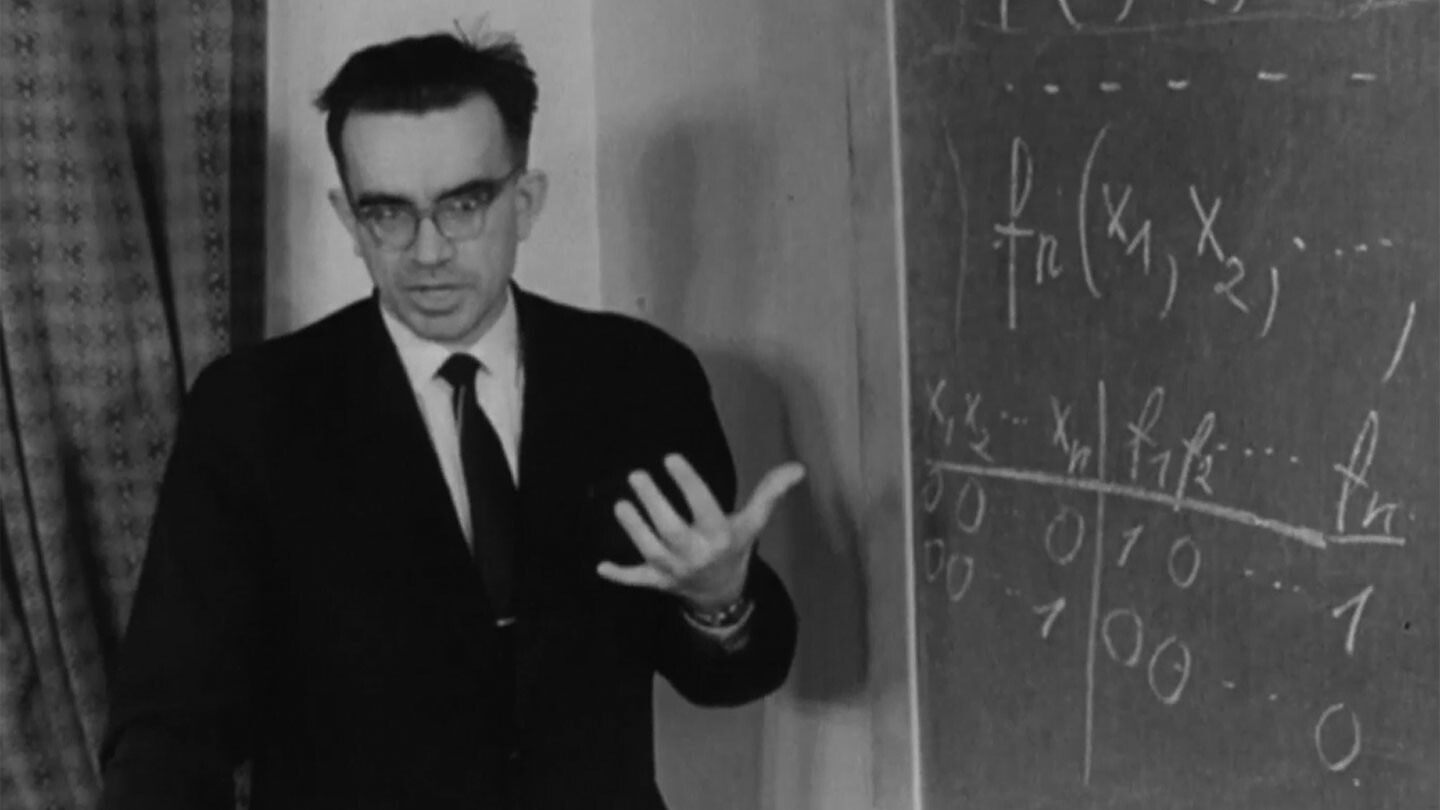
Victor Glushkov, Soviet computer scientist who proposed the OGAS project to programmatically manage the allocation of resources in the Soviet Union.
The Economic Calculation Problem is actually a multitude of calculation problems under one unified name coined by Mises in his famous Economic Calculation in the Socialist Commonwealth, 1920.
I believe these are problems that are still not adequately understood by most capitalists and socialists alike. Here I will attempt to beat this problem to death, as well as some of its common defenses, such as supercomputers solving this problem.
The failure of socialism is not a failure of human nature or greed, as it is commonly assumed. Rather, it is a fatal flaw in the logic of the socialist information system.
With the exception of market socialism, socialism is not a coherent mathematical information system. Every step towards socialism comes with the inherent loss of rational economic calculation. These calculation problems will arise every time a state subverts free market processes with state planning.
I will address two issues, these issues are not hypothetical scenarios, but rather problems you already experience on a daily basis due to socialist capture.
The two issues I will focus on here are:
How does the socialist enterprise determine metrics for success?
How does it operate towards those metrics efficiently?
Metrics for Success
How do police determine if they’re doing a good job, or if they're meeting the expectations of the public?.…
It's really an open question.
In practically every country, the police are a state-run entity that operates under a socialist model. Any socialist system that disregards profit and loss as a measure of success removes a crucial checks and balances system between the consumer and the producer.
This also leaves the business without a crucial accounting metric.
Profit and loss are the primary metrics of success and failure in the capitalist system. If you reject these metrics, believing them to be barbaric hoarding of wealth, you will have to invent new metrics.
But the socialists have never given a satisfactory, scalable replacement for these success metrics.
In practice, the metrics for success in the socialist enterprise tend to represent the preferences of the state managers rather than the public at large. Although the Soviets made considerable advancements in the fields of rocket science and sports science, they did so at the expense of basic resources like food and sanitation because winning the Olympics and beating the Americans to space were some of the primary objectives of the state managers.
This lack of clear metrics has another consequence of confusion between state apparatuses. Imagine a very large business that owns smaller subsidiaries. Generally the parent company can easily determine its health by examining the bottom line of the balance sheets of each child company. Whether or not this venture is worth continuing can be accounted for by calculating profit and loss.
And although this calculation is subject to mistakes in the capitalist system, it is comparatively impossible in the socialist state. Each committee under the socialist management will have to invent metrics that scale upwards and downwards throughout organs of the state. Otherwise you run into conflicting methodologies and no alignment across the state apparatus.
Some socialists propose that labor value will be the ultimate guiding metric, but this is absurd nativity, since labor is not a uniform and homogeneous quantity.
We can confidently call Enron a fraudulent enterprise because we knew they were inventing their own metrics of accounting that flew in the face of all rational accounting principles. We know they were fraudulently hiding liabilities as profits, and it inevitably resulted in the collapse of the business because it was an unsustainable venture mathematically. Every competent accountant who viewed the entirety of Enron's books could see this was a fraud. But we cannot have such confirmations in the socialist enterprise.
Returning to the question, how do police determine if they’re doing a good job? In the most extreme examples, they simply don't. After all this is a state monopoly, unconstrained by competition and can simply ignore the public if they choose to. Some departments will unfortunately refer to the amount of revenue they've extracted from the public. Other times they may refer to the number of complaints they're receiving. Other times they will put out surveys, which rarely capture good information. I've even heard police will look at overall crime rates as a primary metric for whether they're meeting public needs, a metric so vague and unpredictable they may as well look to the weather to guide them. At best, the socialist can outsource every decision of the socialist enterprise to a public vote, a totally impracticable solution, but as I will soon show, even this still does not solve the problem.
Determining Efficiency
This is the nail in the coffin of socialism, that the socialist enterprise can never determine efficiency in the absence of free market processes.
When the state moves resources around, no market transaction is involved. It simply takes from A and gives to B. Therefore no accurate information about how this transfer affects the supply and supply for this resource can be obtained.
In the free market, every individual participates in the calculation of supply and demand by their individual value and knowledge of that good. This calculation takes place under the common denominator of money which allows us to draw various comparisons of goods that otherwise could not be easily compared.
In a market economy, prices serve as signals to producers and consumers about the relative scarcity of goods and services. When a good is in high demand, its price rises, signaling to producers that they should increase production to meet the demand. Conversely, when a good is in low demand, its price falls, signaling to producers that they should reduce production or switch to producing something else. This feedback loop helps to ensure that resources are allocated efficiently and that production decisions reflect the desires of consumers.
Under socialism and central planning, however, there is no market pricing mechanism to guide production decisions. Even when the socialist system is using money, their prices will not accurately reflect the supply and demand for any resource under socialist supervision. Instead, production targets are set by central planners based on their own judgments about what goods and services are needed. This inevitably leads to inefficient allocation of resources, as producers will not have accurate information about what goods and services are in demand. Without the feedback loop provided by market prices, there is no way to know whether resources are being used efficiently or whether production decisions are reflecting the desires of consumers.
Contrary to the general slogans of socialism, socialism necessarily places the power to solve complex problems in the hands of fewer people, and in doing so you suffer severe information loss that leads to an unworkable system.
You can proclaim that socialism is about "needs" and not "desires", but you still don't understand the problem. Say you issue resources or vouchers according only to their "needs". You will likely have to eliminate all instances of black markets that will arise as individuals naturally begin to trade on their own according to their desires. This could lead to actual surpluses and shortages of resources as these trades are not accounted for within the planners statistics.
I was once flabbergasted when my military buddy informed me that he was watching Humvees. Those in the military may understand what I mean here. Military Humvees don't have keys. Although there may be valid reasons for these vehicles not having keys, what you would never see in a private business is the employment of people (every business's most expensive resource), to act as human keys - as guards to stand watch and ensure that Humvees are properly accounted for.
Using Supercomputers to Solve the Problem
Most socialists I have debated on this problem inevitably try to argue that these problems can be solved by supercomputers, but this is a delusion.
To simulate a market actually changes the market, rendering the simulation useless. It's an interesting infinite regression problem that makes markets inherently unpredictable, and this regression problem appears in all systems where predictions about a system have some degree of influence on the system.
This is not exactly the same problem as the famous Halting Problem, that you can see in Conway's Game of Life, but it's in that same camp of chaos theory predictability problems.
For anybody who is interesting in trading stocks, be aware of anyone who claims to have "solved the market". They are lying. If you do somehow manage to find an equation that creates a consistently profitable trading strategy, you must keep it the utmost secret. Even then, acting on that equation will alter the market, and it will adapt to those changes that eventually render the equation useless.
At best, the socialist enterprise can attempt to copy the actions of a private enterprise that is operating alongside it, but it will always be less efficient, operating at a slower and more resource-intensive pace.
The point still remains that rational economic calculation only arises from the free market system. Socialism is the abolition of rational economic calculation.
Further Beating Common Objections To Death
“Machine learning should be able to in about 5-10 years accurately predict what it is that people want to buy.”
The problem of predicting the wants and needs of humans is not a problem of practicality, it is a metaphysical impossibility, not just impossible in our universe, but in every possible universe.
Say that we calculated every particle in every human being in our economy and were able to create a computer that accurately predicted what every person was going to do next. What is the one variable we can never account for? Our own prediction.
You would never be able to prevent people from acting on this newly obtained information of the future, and inevitably this would invalidate the entire prediction. Say that my simulation shows that a major increase in the price of sugar is about to occur.
This new information provided by the simulation may move the future increase in the price of sugar to right now, as people will attempt to get in early on this predicted increase. This new information will also lead people to draw conclusions they otherwise would not have drawn, meaning other prices will change too.
It might even lead in the price of sugar falling, as people who are thinking 2 steps ahead might realize that this prediction about sugar is actually a a false prediction and begin to short the price of sugar, causing a totally different series of events to occur.
Go deeper into this problem, you won't regret it, it might change your entire outlook on life.
The problem I am describing is that predicting, with any degree of accuracy, what people want to purchase always changes what humans want to purchase to the degree that the prediction is allowed to influence the market.
There is one loophole to this: you could theoretically predict the future state of the market with perfect, 100% accuracy if you were isolated to a closed system where you could never influence the market with that new knowledge, rendering this knowledge completely useless.